Equipment
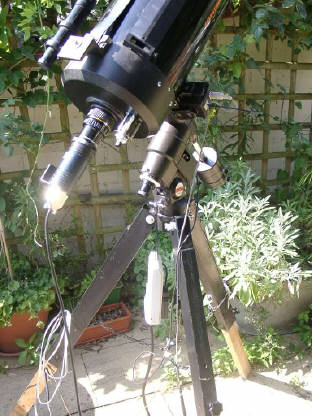
C8 on Vixen GP with the
Skysensor 3D controller
(sold)
# The image field shows no significant coma up to the MX7 chip size; a corrector is only required for the SXV.
# The fiberglass tube has low thermal expansion, so even multi-hour exposures without refocusing are no problem.
# However, due to the large aperture ratio, precise adjustment is necessary after each setup. The tube also weighs a good 20 kg, but the Gemini mount has handled this, including the 15 kg counterweights, without any issues so far.
# The Gemini was a real eye-opener after the Vixen GP. High positioning accuracy, no backlash in RA and hardly any in DEC. The periodic worm gear error is within the specified range of +/- 5 seconds.
So far, I have had no complaints about the mount. The FS2 works flawlessly, is easily controlled via PC, and is efficient to use. Only the PEC function still doesn't work with the Gemini. However, since I generally use an autoguider or self-guider, this is less important.
In 2022, a Skywatcher EQ6R was added, which now also enables automated meridian flips. The Gemini remains in use for the heavy Parks Newtonian telescope and is now controlled by an OnStep controller, which also allows for meridian flips.
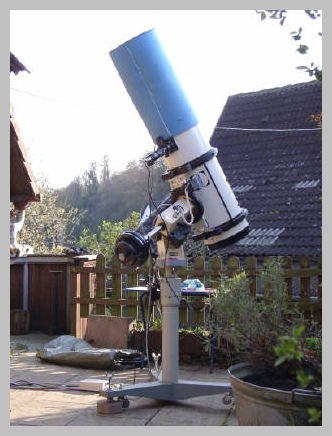
Parks 10"/F3.5 on the Gemini 40 with the
FS2-controller
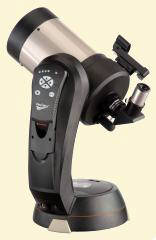
Celestron C5 on a Nexstar-mount.
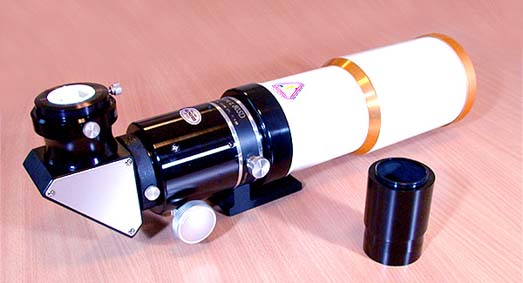
Wiliam Triplett APO 80/480
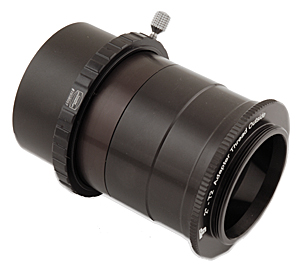 The
first attempt to create a mosaic with the SXV and the 80mm William, and
then the use of the ALCCD6 with the larger chip, made it clear that
this would not work without a field flattener. The
TS flattener proved extremely effective here, as the adjacent excerpts
from the corner of the ALCCD6's field of view demonstrate.
The
first attempt to create a mosaic with the SXV and the 80mm William, and
then the use of the ALCCD6 with the larger chip, made it clear that
this would not work without a field flattener. The
TS flattener proved extremely effective here, as the adjacent excerpts
from the corner of the ALCCD6's field of view demonstrate.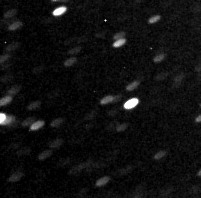
Image corner of the ALCCD6 in the William APO 80/480 without flattener
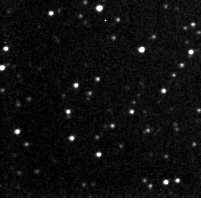
Image corner of the ALCCD6 in the William APO 80/480 with flattener
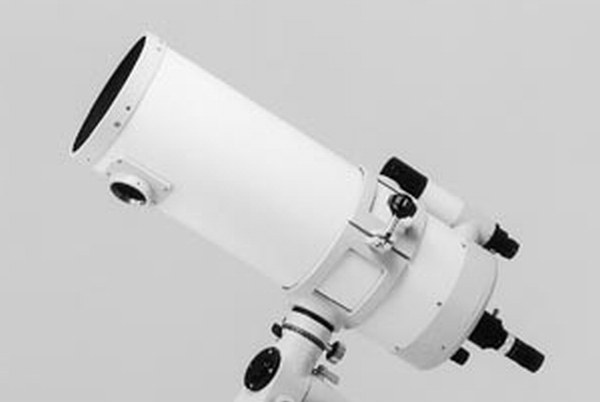
Takahashi CN-212. Sold 2011.
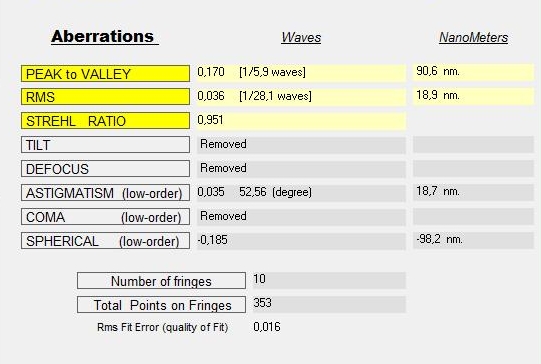
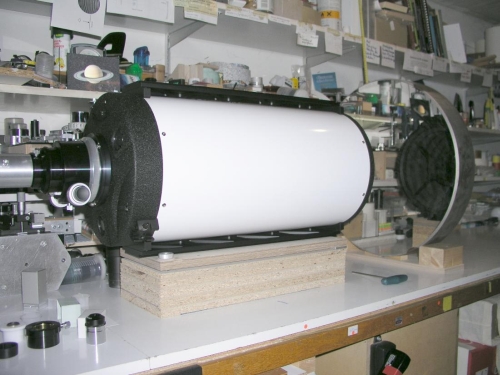
GSO Ritchey-Chrétien 10" F8 on Wolfgang Rohr's optical bench.
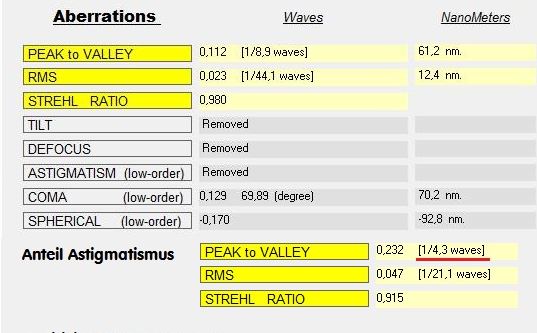
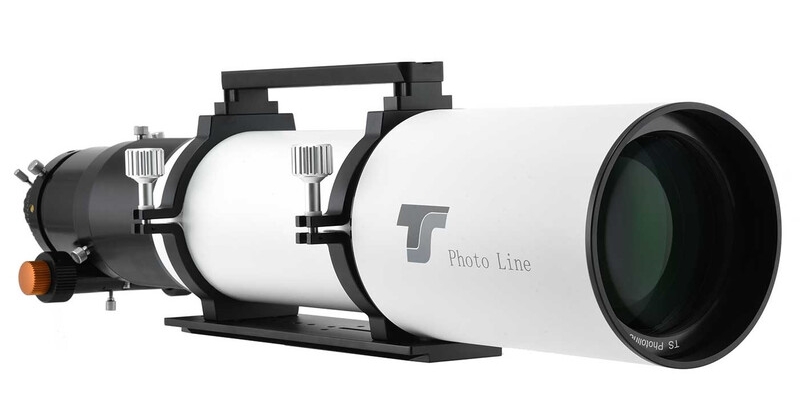
Triplett APO 130mm F7
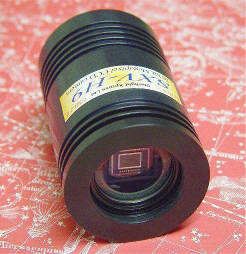
SXV-H9 -
my third camera from Starlight Xpress. Sold.
Therefore, I decided to use a cooled CCD camera with a larger chip. For price reasons, and to avoid the compromises of uncooled chips in EOS cameras, I opted for the ALCCD6 (=QHY8), a 6 Mbit camera with an APS-C chip size. Initial images yielded good results. While the noise is higher and the quantum efficiency lower than with the SXVH9, it doesn't suffer from the color synthesis and amplifier noise issues of the MX7c. Capture without a dark frame or flat field is easily achievable, and the Ha sensitivity is good. The ASTROART plugin works flawlessly.
Nevertheless, I haven't been able to establish an image processing workflow that consistently produces satisfactory results. Uneven intensity distributions in the RGB channels, in particular, have often been a problem.
So I decided to switch back to a black and white camera with a larger sensor (Atik 383L+).
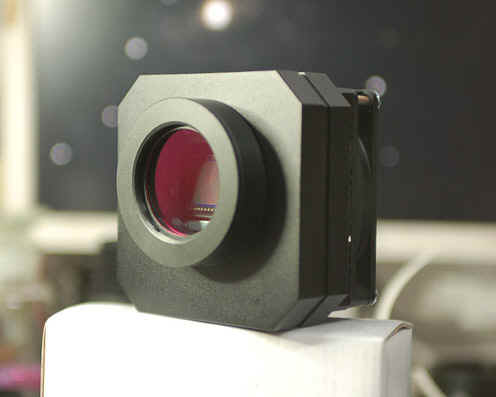
ALCCD6 (=QHY8)
APS-size color chip
Sold 2012
I bought the Atik383L+ at the end of 2012 for two reasons:
1) to have a larger sensor compared to the SXV
2) because of the tried and tested KAF8300 sensor. On Wolfi Ransburg's advice, I opted for the slightly smaller 383 instead of the ATIK4000. This saves additional effort in avoiding vignetting caused by filters, guiders, etc. The 80 mm secondary mirror of the Parks 10" Newtonian telescope couldn't stay – it was replaced with a 104 mm mirror.
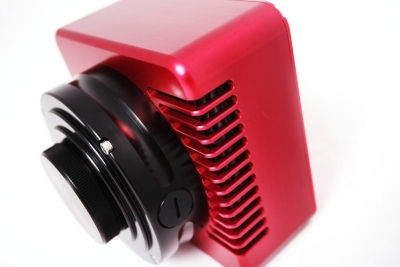
The ATIK383L+ (KAF8300 17.6 mm x 13.5 mm mono chip)
Purchased in 2012, sold in 2022
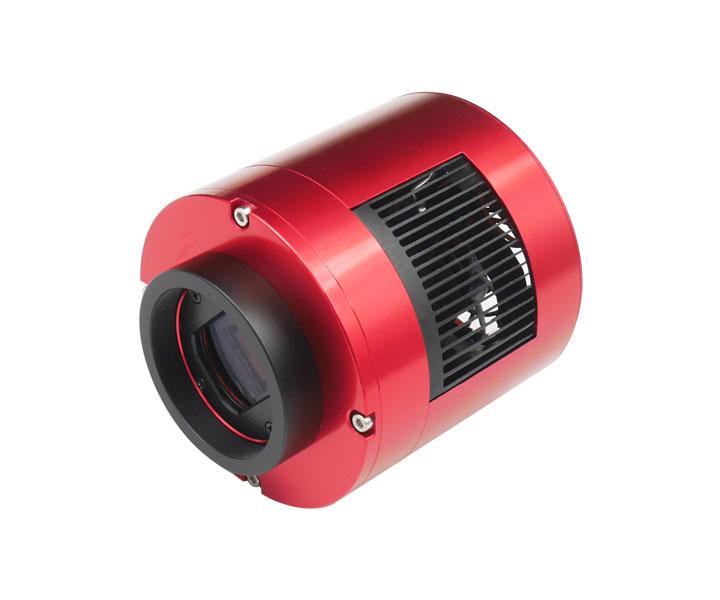
ZWO 294MCpro, purchased 2022
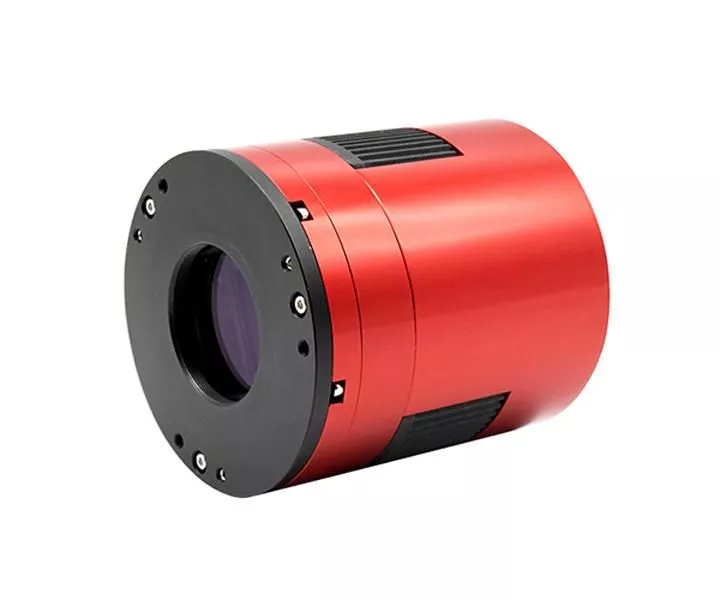
ZWO 2600MCpro, purchased 2024
After initial attempts with the Fuji X10 proved less than successful, I began exploring wide field photography with a Canon EOS 700D and 60Da. Under the superb skies of the semi-deserts in the southwestern USA, I was quickly able to capture successful images of the Milky Way.
The Vixen Polarie also proved its worth for tracking at short focal lengths. The Samyang 14mm f/2.8 and 85mm f/1.4 lenses are significantly superior to the Sigma 18-200, which I use for daylight photography.
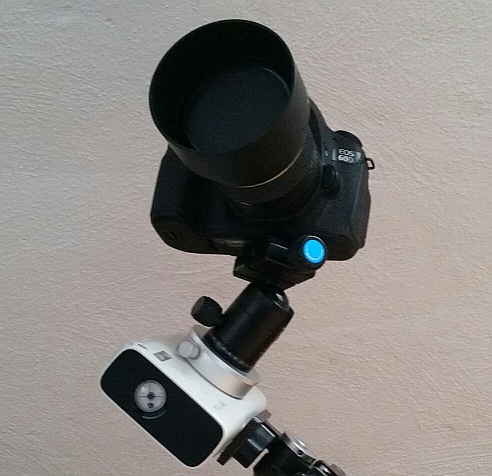
Canon EOS 60Da with Samyang 85mmF1.4 on Vixen Polarie
Purchased 2017 Sold 2019
Several attempts with travel-friendly mounts like the Skywatcher Star Adventurer, the Omegon Minitrack, and the AstroTrac TT320 didn't meet my expectations.
Only the Chinese Strainwafe UMI 17L mount enabled me to take long-distance images that were in no way inferior in quality to those obtained with stationary mounts.
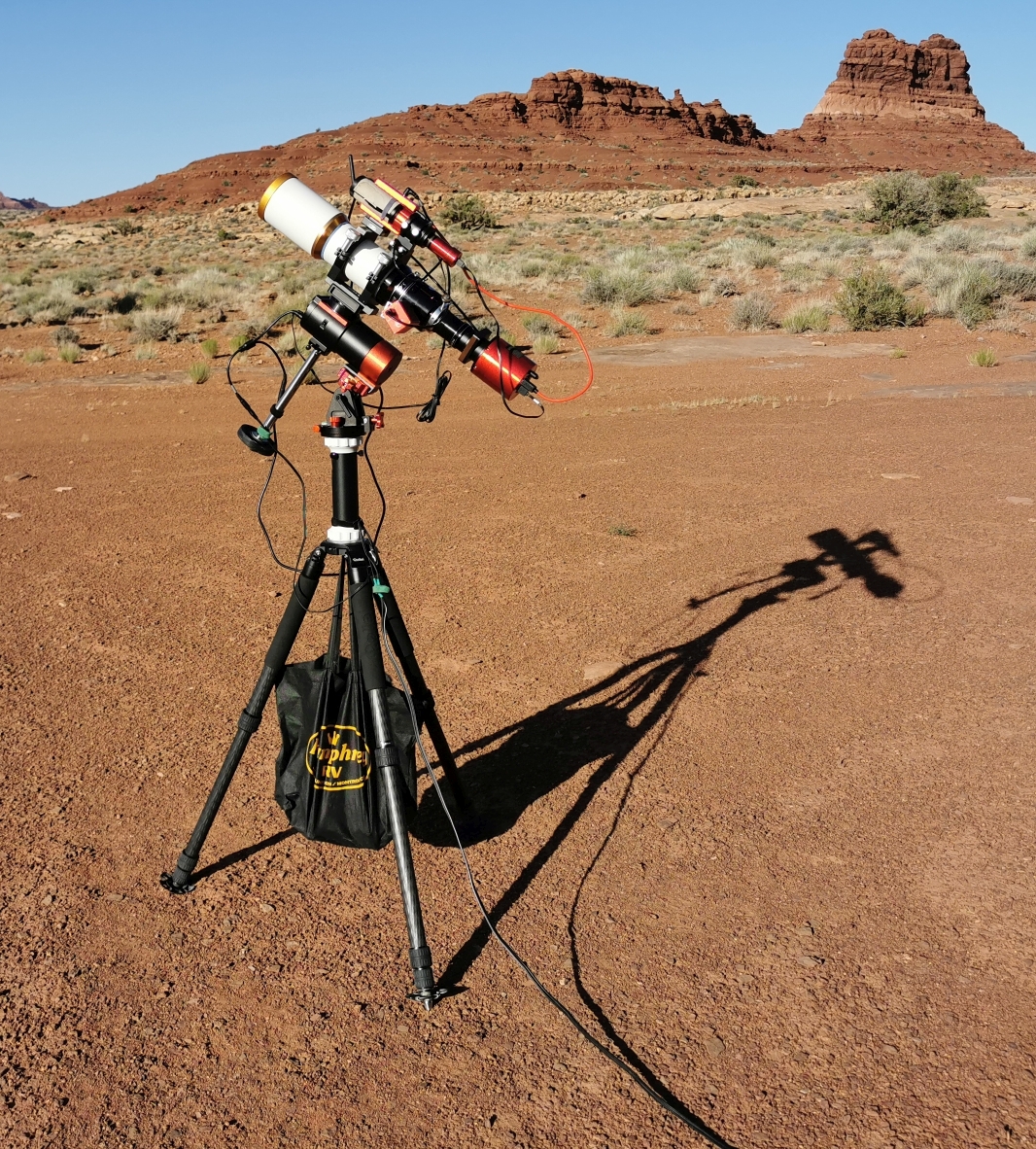
Travel mount UMI 17L
Location
The location is far from ideal – stray light from streetlights and neighbors, a severely limited view of the sky, and often requiring shooting over rooftops. Of course, there are better observing locations in the nearby Black Forest, but the effort is too great for me – after all, there's life outside of astronomy. The transparency is generally moderate, rarely better than magnitude 4, and the seeing is exceptionally good, sometimes reaching 2 seconds, but usually more like 3-4 seconds.
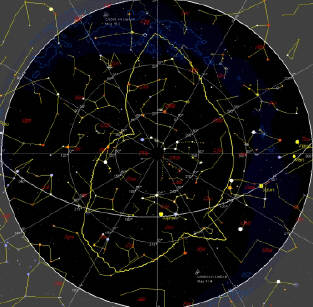
My "observation window", south is below